Coil — Musick To Play In The Dark
(English below)
Londyn, 1979. Geff Rushton ma 17 lat.
Naprawdę nazywa się Geoffrey Laurence Burton, ale przyjął nazwisko ojczyma i przedstawia się jako Rushton. Chodzi do Lord Williams’s School w Thame, zwykłej angielskiej szkoły z internatem. Jest gejem w kraju, w którym homoseksualizm jeszcze niedawno był przestępstwem.
W szkole wybucha skandal wokół Rushtona, jego kolegi i nauczyciela, który uczył ich astralnej projekcji. Coś w rodzaju skandalicznego, międzypokoleniowego romansu, przynajmniej tak wynika z relacji swiadków. Rushton nigdy tego nie potwierdza wprost, ale incydent zostaje z nim na długo. To pierwszy sygnał, że jego osoba i zainteresowania, budzą w ludziach niepokój i dystans. Nie znajdując zrozumienia wśród rówieśników i rodziny, zaczyna szukać więc gdzie indziej.
Znajduje okultyzm. Czyta Aleistera Crowleya, chociaż rodzice odmawiają mu kupowania jego książek. W wieku 14 lat pisze list do Alexa Sandersa, znanego jako “Król Czarownic”, z prośbą o przyjęcie do jego kowenu. Sanders odpisuje, że chętnie, ale dopiero gdy Rushton skończy 18 lat.
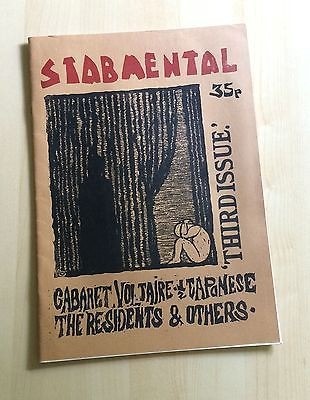
W 1979 roku zaczyna wydawać Stabmental, fanzine pisany na maszynie i powielany na ksero, poświęcony rodzącej się scenie industrialnej i post punkowej. Siedem numerów do 1982 roku, szósty w formie kasety z muzyką. Wokół zina buduje sieć kontaktów w całej Anglii, wymienia się nagraniami i pomysłami. To przez tę sieć poznaje Petera “Sleazy’ego” Christophersona, wtedy członka Throbbing Gristle, zespołu, którego jest wieloletnim fanem.
Jesienią 1982 roku Rushton zaczyna używać nazwy Coil dla własnych nagrań. Według niego nazwa odnosiła się do spirali, węża, podwójnej helisy DNA, kształtu powtarzającego się w naturze, który stał się rdzeniem ich estetyki. Pierwsze nagranie pod tym szyldem powstaje w maju 1983 roku, na czterościeżkowym magnetofonie. To bedroom project, jeszcze nie zespół, tylko wentyl dla kreatywnego i niespokojnego umysłu.
W 1984 roku Coil przestaje być projektem jednej osoby. Rushton przyjmuje na stałe imię John Balance i wraz z Christophersonem formalizują duet. Są parą, zarówno twórczą, jak i romantyczną. Łączy ich okultyzm, alchemia i wspólna miłość do używek, ta ostatnia u Balance’a z czasem przerodzi się w wieloletni, ciężki alkoholizm, który nieuchronnie doprowadzi do jego śmierci.
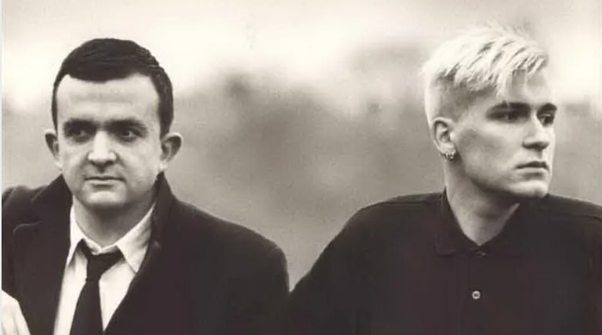
Coil, czyli laboratorium magii.
Duet zaczyna działać w 1984 roku zaczynając od EP-ki How to Destroy Angels, o podtytule 17 minut muzyki na akumulację męskiej energii seksualnej. To nie jest metafora, tylko deklaracja programu na najbliższe dwie dekady. Balance i Christopherson traktują muzykę jak narzędzie magiczne, nie jak rozrywkę. Praktykują „chaos magick”, „sigil magick”, czy astralne projekcje. Czerpią wprost z Crowleya i Austina Osmana Spare’a. Syntezator i taśma studyjna są dla nich tym, czym dla innych magików różdżka, krąg kredowy czy starożytny grymuar.
Rok później wychodzi Scatology, pierwszy pełny album. Tytuł odnosi się do skatologii, nauki o odchodach, a cała płyta to w gruncie rzeczy alchemiczny eksperyment, czyli próba zamiany gówna w złoto, dosłownie i w przenośni. Na płycie ląduje ich cover „Tainted Love” Soft Cell, spowolniony do struktury żałobnego marsza. To pierwsze w historii wydanie muzyczne, z którego dochód trafia na cele związane z AIDS, cały zysk idzie do Terrence Higgins Trust. Teledysk do utworu, w którym umierającego mężczyznę gra sam Balance, trafia jako pierwszy w historii teledysk do stałej kolekcji MoMA w Nowym Jorku. Coil ma swój eksponat w jednym z najważniejszych muzeów sztuki na świecie zaledwie rok po oficjalnym rozpoczęciu działalności.
[[yt: 2v9Cug52Wus]]
Horse Rotorvator z 1986 roku to już coś znacznie cięższego. Balance opowiadał, że tytuł wziął się z jego snu o maszynie złożonej z czterech kolosalnych koni, orzącej ziemię i zbierającej ludzkie czaszki. Płytę przenika śmierć i apokaliptyczne wizje, czego źródłem są tragiczne wydarzenia z życia duetu. AIDS zabiera wtedy przyjaciół z ich kręgu jeden po drugim, a Horse Rotorvator jest w dużej mierze zapisem tej żałoby i próbą jej oswojenia.
Rok później Clive Barker zatrudnia ich do napisania muzyki do „Hellraisera”. Studio odrzuca ich ścieżkę dźwiękową jako zbyt niepokojącą, zastępuje ją tradycyjną orkiestrową ilustracją. Coil i tak wydaje swoją wersję, niezależnie.
Na początku lat 90. duet wchodzi na zupełnie inną soniczną częstotliwość, i to też moment, w którym ich sprzęt zaczyna się zmieniać. Przy Love’s Secret Domain z 1991 roku pracują już z inżynierem Dannym Hyde’em, który wnosi do sesji własny arsenał, między innymi Akai MPC 60, jeden z pierwszych tego rodzaju samplerów w całym UK. Płyta powstaje pod wpływem intensywnej eksploracji MDMA i ketaminy, na fali brytyjskiej kultury rave i acid house, i brzmi jak chaotyczny, halucynacyjny kalejdoskop, kompletnie inny od surowego industrialu z lat 80. Miłość do używek, o której już wspominaliśmy, przestaje być tylko prywatnym nawykiem i staje się metodą pracy w studiu.
[[yt: rELqs5B75eI]]
W 1998 roku wychodzi Time Machines, cztery długie, hipnotyczne utwory dronowe, z których każdy nosi nazwę konkretnego związku chemicznego, halucynogenu. Za warstwę brzmieniową odpowiada tu głównie Drew McDowall, dokłada analogowy ARP 2600 i Synton Fenix, spięte razem tak, żeby generować gęste, powoli zmieniające się soundscape’y. Zamysł jest taki, żeby same częstotliwości rozstrajały poczucie czasu u słuchacza, bez konieczności zażywania czegokolwiek. Muzyka jako substytut substancji.
To właśnie stąd, z tego dokładnie miejsca, Balance i Christopherson wchodzą w Musick to Play in the Dark.
Musick to Play in the Dark, czyli wejście w noc.
Pod koniec lat 90. Balance i Christopherson wyprowadzają się z Londynu do dużego, wiktoriańskiego domu w Weston-super-Mare, sennym nadmorskim miasteczku w Somerset. Przeprowadzka i nowe otoczenie uruchamia w nich fundamentalną, konceptualną zmianę. Wszystko, co robili do tej pory, łącznie z agresywnym Love’s Secret Domain, zaczynają nazywać „Solar Musick”, muzyką słoneczną: chaotyczną, gorącą, wyczerpującą. To, co nagrywają teraz, nazywają „Moon Musick”: muzyką cichą, nocną i chłodną. Musick to Play in the Dark powstaje z myślą o słuchaniu w kompletnej ciemności, jako coś w rodzaju bramy do podświadomości.
[[yt: H7VAlw3d72s]]
Otwierający „Are You Shivering?” to najczystsza wersja tej intencji. Balance szeptem pyta słuchacza, czy się trzęsie, czy jest mu ciepło. Sam mówił później, że to pytanie wzięło się wprost z ich wspólnych podróży na MDMA, gdzie pytali się nawzajem, czy już się trzęsą i czy ich wzrok staje się zamazany. Piosenka przenosi ten stan na taśmę, próbuje wywołać u słuchacza to samo rozmycie granic bez żadnej substancji.
Zaraz po niej wchodzi „Red Birds Will Fly Out of the East and Destroy Paris in a Night”, instrumentalny, zbudowany na spiralnie rozrastających się liniach syntezatora, w kolaboracji z Thighpaulsandrą, który dołączył do projektu w ostatnich latach jego istnienia. Tytuł to nie wymysł Balance’a, tylko autentyczna, szalona przepowiednia Nostradamusa, datowana na połowę lipca 1999 roku. Coil bierze cudzą apokaliptyczną wizję i zamienia ją w hipnotyczną, coraz szybciej wirującą sekwencję dźwiękową.
Potem przychodzi „Broccoli”, pozornie najprostszy utwór na płycie. Balance sam wyjaśniał, że piosenka jest o zieleninie i o kulcie przodków, o czymś, co objawiło mu się w duchowej rozmowie z Austinem Osmanem Sparem i z jego zmarłym dziadkiem. Rada, żeby jeść warzywa, zwłaszcza brokuły, brzmi jak coś, co można usłyszeć od babci, ale pod spodem kryje się jedna z myśli, która stoi za całą płytą. Próba oswojenia śmierci przez codzienną, ziemską czynność.
Na drugim wolumenie, wydanym rok później, znajduje się „Batwings (A Limnal Hymn)”, uznawany przez wielu fanów za najbardziej intensywny duchowo utwór w całym katalogu Coil. Tekst zbudowany jest z fragmentów „Musaeum Clausum” Thomasa Browne’a, siedemnastowiecznego traktatu o rzeczach zagubionych i niemożliwych. Balance w stanie transu rozmontowuje je i składa na nowo, prowadząc do glosolalii, czyli śpiewu w języku, który jest ciągiem dźwięków pozbawionych semantycznego znaczenia. Christopherson określił to później jako „język, który znał tylko on”. Cztery lata po wydaniu płyty ten właśnie utwór zostanie odtworzony na pogrzebie Balance’a.
[[yt: a2VgUkAiu3s]]
Koniec, dwa razy.
13 listopada 2004 roku Balance ginie w swoim domu w Weston-super-Mare. Podczas jednej z intensywnych pijackich sesji wypada z balkonu na piętrze i umiera w szpitalu kilka godzin później. To śmierć nagła, gwałtowna, dokładnie taka, jaką zapowiadał ich wieloletni romans z alkoholem i innymi używkami. Ten sam, który kiedyś napędzał ich muzykę, a w końcu ją przerósł.
Rok później Christopherson wydaje The Ape of Naples, ostatni album Coil, złożony z przerobionego materiału z ostatniej dekady ich wspólnej pracy i zadedykowany pamięci Balance’a. Zamykający płytę utwór, „Going Up”, wykorzystuje próbkę głosu Balance’a z ich ostatniego wspólnego koncertu, kilka miesięcy przed jego śmiercią. Christopherson nazwał to później jego własnym epitafium.
[[yt: 6lDCNHJqZ84]]
Christopherson formalnie kończy wtedy istnienie Coil. Ogłasza, że bez Balance’a zespół po prostu przestaje istnieć, i rok później przenosi się do Bangkoku. Zaczyna nowy, solowy projekt, The Threshold HouseBoys Choir, nazwany na cześć dawnej siedziby Coil. Sześć lat później, 24 listopada 2010 roku, umiera we śnie, we własnym domu w Bangkoku. Przyczyna zgonu nigdy nie została podana publicznie.
Trudno nie czytać tych dwóch śmierci przez pryzmat tego, co samo duo nazwało solar i moon musick. Balance odchodzi w sposób słoneczny: gwałtownie, w środku nocy, ale z hukiem. Christopherson odchodzi jak ich późna twórczość, po cichu, we śnie, daleko od domu, w tajemniczy sposób. Dwudziestotrzyletnie partnerstwo, twórcze i romantyczne zarazem, kończy się więc jak ich transgresja między dniem a nocą. Jedno odejście krzyczy, drugie milczy. Razem domykają coś, co zaczyna się od siedemnastolatka studiującego uniwersalność kształtu spirali, a kończy jako jeden z najbardziej wpływowych i ezoterycznych katalogów w historii muzyki eksperymentalnej.
/// ENG ///
London, 1979. Geff Rushton is 17.
His real name is Geoffrey Laurence Burton, but he’s taken his stepfather’s surname and goes by Rushton. He attends Lord Williams’s School in Thame, an ordinary English boarding school. He’s gay in a country where homosexuality was, until quite recently, a crime.
A scandal breaks out at school around him, his friend, and a teacher who’d been teaching them astral projection. Something like a scandalous, intergenerational affair, at least according to the rumors. Rushton never confirms it outright, but the incident stays with him for a long time. It’s the first sign that who he is and what he’s drawn to unsettles people, keeps them at a distance. Finding no understanding among his peers or his family, he starts looking elsewhere.
He finds the occult. He reads Aleister Crowley, even though his parents refuse to buy him the books. At 14 he writes a letter to Alex Sanders, known as the “King of the Witches,” asking to be initiated into his coven. Sanders writes back that he’d be glad to, but only once Rushton turns 18.
In 1979 he starts putting out Stabmental, a fanzine typed up and photocopied, dedicated to the emerging industrial and post-punk scene. Seven issues by 1982, the sixth in the form of a cassette of actual music. Around the zine he builds a network of contacts across England, trading recordings and ideas. It’s through that network that he meets Peter “Sleazy” Christopherson, then a member of Throbbing Gristle, a band he’s been a devoted fan of for years.
In the autumn of 1982 Rushton starts using the name Coil for his own recordings. According to him, the name referred to the spiral, the serpent, the double helix of DNA, a shape that recurs throughout nature and became the core of their whole aesthetic. The first recording under that name is made in May 1983, on a four-track machine. It’s a bedroom project, not yet a band, just an outlet for a restless, creative mind.
In 1984 Coil stops being a one-person project. Rushton and Christopherson formalize the duo, and Rushton permanently adopts the name John Balance. They’re a couple and creative partners. What binds them is the occult, alchemy, and a shared love of substances. For Balance, that love will curdle over the years into a heavy, chronic alcoholism that eventually kills him.
Coil, or a laboratory of magic.
The duo starts in 1984 with the EP How to Destroy Angels, subtitled 17 Minutes of Music for the Accumulation of Male Sexual Energy. That’s not a metaphor, it’s a mission statement for the next two decades. Balance and Christopherson treat music as a magical tool, not entertainment. They practice chaos magic, sigil magic, astral projection. They draw directly from Crowley and Austin Osman Spare. The synthesizer and the studio tape are, for them, what the wand, the chalk circle, or an ancient grimoire are to other magicians.
A year later comes Scatology, their first full album. The title refers to the study of excrement, and the whole record is essentially an alchemical experiment, an attempt to turn shit into gold, literally and figuratively. The album includes their cover of Soft Cell’s “Tainted Love”, slowed down into the shape of a funeral march. It’s the first music release in history whose profits go toward AIDS-related causes, with all proceeds donated to the Terrence Higgins Trust. The video for the track, in which Balance himself plays a dying man, becomes the first music video ever acquired into the permanent collection of MoMA in New York. Coil has a piece in one of the most important art museums in the world barely a year after officially starting out.
[[yt: 2v9Cug52Wus]]
Horse Rotorvator from 1986 is something considerably heavier. Balance said the title came from a dream he’d had, of a machine made of four colossal horses, ploughing the earth and harvesting human skulls. The record is haunted by death and apocalyptic visions, rooted in the tragedies unfolding in the duo’s own lives. AIDS is taking friends from their circle one after another, and Horse Rotorvator is, in large part, a record of that grief and an attempt to make it bearable.
A year later, Clive Barker hires them to score “Hellraiser.” The studio rejects their soundtrack as too disturbing and replaces it with a conventional orchestral score. Coil releases their version independently anyway.
By the early ’90s the duo shifts onto an entirely different sonic frequency, and it’s also the point where their gear starts to change. On Love’s Secret Domain (1991) they work with engineer Danny Hyde, who brings his own arsenal into the sessions, among other things an Akai MPC 60, one of the first samplers of its kind in the UK. The album is shaped by heavy experimentation with MDMA and ketamine, riding the wave of Britain’s rave and acid house culture, and sounds like a chaotic, hallucinatory kaleidoscope, a world away from the raw industrial of the ’80s. Their love of substances, mentioned earlier, stops being purely a private habit and becomes a working method in the studio.
[[yt: rELqs5B75eI]]
In 1998 comes Time Machines four long, hypnotic drone pieces, each named after a specific hallucinogenic chemical compound. The sound is shaped mainly by Drew McDowall, who brings in an analog ARP 2600 and a Synton Fenix, wired together to generate dense, slowly shifting soundscapes. The idea is that the frequencies themselves should distort the listener’s sense of time, no substance required. Music as a substitute for the drug itself.
It’s from exactly this point that Balance and Christopherson step into Musick to Play in the Dark.
Musick to Play in the Dark, entering the lunar phase.
In the late ’90s, Balance and Christopherson leave London for a large Victorian house in Weston-super-Mare, a sleepy seaside town in Somerset. The move and the new surroundings trigger a fundamental, conceptual shift. Everything they’d made up to that point, including the aggressive Love’s Secret Domain, they start calling “Solar Musick”: chaotic, hot, exhausting. What they’re recording now, they call “Moon Musick”: quiet, nocturnal, cold. Musick to Play in the Dark is made to be listened to in total darkness, something like a gateway to the subconscious.
[[yt: H7VAlw3d72s]]
The opener, “Are You Shivering?”, is the purest form of that intention. Balance whispers, asking the listener whether they’re shivering, whether they’re warm. He said later that the question came directly from their shared MDMA trips, where they’d ask each other whether they were already shaking, whether their vision was starting to blur. The song carries that state onto tape, trying to induce in the listener the same dissolving of boundaries, without any substance at all.
Right after it comes “The Red Birds Will Fly Out of the East and Destroy Paris in a Night”, an instrumental built on spiraling, ever-expanding synth lines, made in collaboration with Thighpaulsandra, who’d joined the project in its final years. The title isn’t Balance’s invention, it’s an actual, deranged prophecy from Nostradamus, dated to mid-July 1999. Coil takes someone else’s apocalyptic vision and turns it into a hypnotic, ever-faster spinning sequence of sound.
Then comes “Broccoli”, on the surface the simplest track on the record. Balance himself explained that the song is about greens and ancestor worship, something revealed to him in a spiritual conversation with Austin Osman Spare and his own dead grandfather. The advice to eat your vegetables, broccoli especially, sounds like something out of your grandmother’s mouth, but underneath it sits one of the ideas driving the whole album: an attempt to make peace with death through a small, everyday, earthbound act.
On the second volume, released a year later, sits “Batwings (A Liminal Hymn)”, widely considered by fans to be the most spiritually intense track in Coil’s entire catalog. The lyrics are built from fragments of Thomas Browne’s “Musaeum Clausum”, a seventeenth-century treatise on lost and impossible things. In a trance state, Balance takes it apart and reassembles it, sliding into glossolalia, singing in a string of sounds stripped of semantic meaning. Christopherson later described it as “a language only he knew”. Four years after the album’s release, this same track would be played at Balance’s funeral.
[[yt: a2VgUkAiu3s]]
The end, twice.
On November 13, 2004, during one of his heavy drinking sessions, Balance falls from an upstairs balcony in his home in Weston-super-Mare and dies in the hospital a few hours later. It’s a sudden, violent death, exactly the kind their years-long affair with alcohol and other substances had been foretelling all along. The same affair that once fueled their music eventually outgrew it.
A year later, Christopherson releases The Ape of Naples, Coil’s final album, built from reworked material spanning the last decade of their work together and dedicated to Balance’s memory. The album’s closing track, “Going Up” samples Balance’s voice from their last show together, just months before his death. Christopherson later called it his own epitaph.
[[yt: 6lDCNHJqZ84]]
Christopherson formally ends Coil’s existence at that point. He announces that without Balance, the band simply ceases to exist, and a year later he moves to Bangkok. He starts a new solo project, The Threshold HouseBoys Choir, named after Coil’s old headquarters. Six years later, on November 24, 2010, he passes away in his sleep, in his home in Bangkok. The cause of death was never made public.
It’s hard not to read these two deaths through the lens of what the duo themselves called solar and moon musick. Balance leaves the solar way: violently, in the middle of the night, but with a bang. Christopherson leaves the way their late work sounded: quietly, in his sleep, far from home, mysteriously. A twenty-three-year partnership, creative and romantic at once, ends like their own transgression between day and night. One departure screams, the other stays silent. Together they close something that began with a 17 year old studying the universal shape of a spiral, and ends as one of the most influential and esoteric catalogs in the history of experimental music.
.jpg)
![Satl — Cold Nights EP [WYWIAD]](/covers/a283384424_1x1_700.avif)
.jpg)